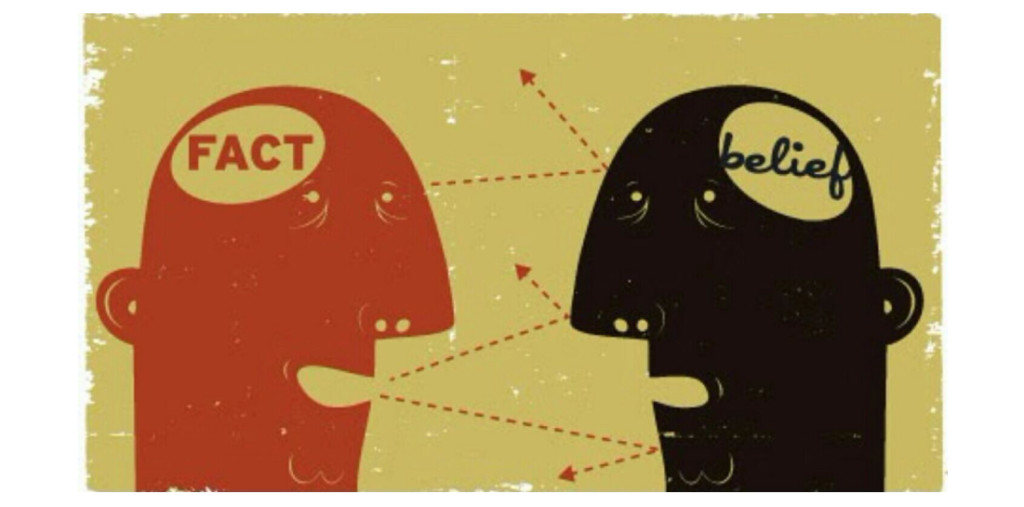
We wouldn’t be human without unconscious bias, and we wouldn’t be able to function without our unconscious brain – we make on average 35,000 decisions as day using our ‘system 1’ part of our brain according to Daniel Kahneman’s research. System 1 relies on heuristics (shortcuts) to make decisions. The problem is that sometimes these shortcuts will be wrong because they are biased (e.g. we hear someone’s accent and immediately assuming they are intelligent), so we need to learn interrupt these biases when they happen.
Awareness
The first step to overcoming bias is acknowledging that we are irrational human beings and then we can work on moving some of our unconscious decisions into conscious ones.
Our biases will be unique to us, influenced by our upbringing, family values, culture and to what extent we’ve been exposed to people who different from ourselves. Understanding which cognitive biases (e.g. affinity, gender or conformity bias) typically affect our decision-making about people is a good first step – there is a helpful summary here published by Catalyst.
We can explore our own unconscious biases by taking one of the Harvard Implication Association tests. I always learn something when test myself (and yes I am biased too). Also consider trying an Inner circle exercise to explore who you tend to surround yourself with.
Expand your Inner Circle
Being aware is just the first step. Next you need to ask questions, reflect, understand whether you need to make changes to your inner circle or improve you knowledge of different culture.
Why not consider speaking to someone at work you’ve never spoken to before? Ask them what they’re working on or ask them to share their story or experience. You will be so surprised what you learn and how people open up (this happened to me twice this week – I asked the question ‘would you be happy to share a little about your experience’ and I had no idea what would come back but learnt so much about these people’s backgrounds).
Being pro-active in removing unintended bias
Now the hard bit – overcoming bias every day is a habit that we need to continually build. As with any habit building, the easiest way to embed new habits, is to put it into your every day routine. To reference my previous blog on creating behavioural change, for habits we need to think 1) Cue, 2) Routine, 3) Reward.
Here’s an example:
- Cue: the start of your working day/ on your commute into work / opening your laptop
- Routine: review meetings you are facilitating that day – consider how will you be inclusive? If it’s a team meeting – ensure everyone’s voice is heard, call out any micro-incivilities that you spot (e.g. unwanted banter or people being talked over) or if it’s a talent review meeting, challenge assumptions and share objective assessments to ensure people are reviewed fairly.
- Reward: knowing you’ve successfully acted in an inclusive way, and you’ve heard more contributions or ideas than you would have otherwise or knowing you are building a diverse future talent pipeline.
Take action when you witness bias
This is also a hard step. A recent Deloitte study showed that 92% of individuals identify as allies, but 30% reported ignoring bias that they witnessed or experienced.
We’ve got to empower ourselves and others to call out bias in the moment. This is like flexing a muscle, we’ve got to try it and know it will take practice.
Think of the example when you hear in in a succession planning meeting ‘she has a young child and won’t be able fulfil the demands of this role, which includes travel’. How could you interrupt this bias? Perhaps you could say ‘I understand why you might be concerned about that, but have you actually spoken to her about her future aspirations and what her support network is like?’
Another example could be in an interview situation you hear ‘they aren’t a good culture fit’. This is red flag for bias – whenever someone is following their ‘gut feeling’, this is basically unconscious bias in action. Instead ensure you use structured interview questions which look for ‘culture add’ and assesses values-alignment, rather than whether you see them getting along well in the team.
Overcoming bias is not easy, it’s like physical exercise – we know it will lead to good outcomes, but it takes continued mental focus. With practice, starting small with building habits and recognising ourselves and those around us when we see inclusive behaviour, we can continue to interrupt and reduce unconscious bias in the workplace.

 Inclusion Now