With International Women Day just around the corner on 8 March and this year’s theme of #EmbraceEquity, it’s the perfect opportunity to unpick what equity is, how it plays out and what we can do to create more equity.
The difference between equality and equity
Many people are familiar with this equality versus equity image (credit: IWD website), it demonstrates how treating everyone the same i.e., giving everyone a box to see over the fence, results in different and unfair outcomes for individuals.
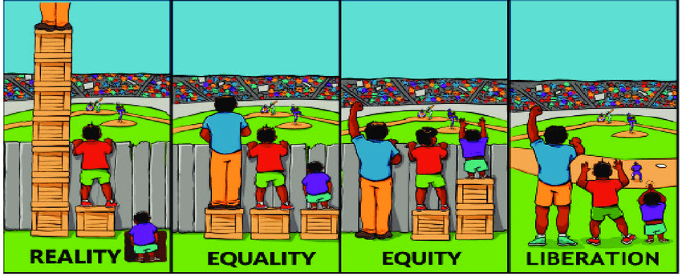
The theory makes sense – that we can’t just treat everyone the same because it doesn’t acknowledge we are all different – but what are some real-life examples? And more importantly how can those with institutional or social power change the structures and barriers to enable everyone to have access to the same opportunities.
This conversation must touch on the topic of privilege; a divisive topic for many because it can lead us into a place of discussing who has had the greater hardship in the life. When we get comfortable with the fact that not everyone starts from the same starting place and that some of us have more unearned advantages than others, we can start to address the extra support that under-represented and marginalised groups may need e.g. amplifying quieter voices.
Inequity examples
As Caroline Criado highlights in her book ‘Invisible Women’, women are often not included in medical research trials or that car safety tests only use male crash test models and therefore this puts women’s lives at risk. We need to ensure women are included in all research and safety tests to ensure their health and safety.
In the corporate workplace, if we only provide paid parental leave to mothers or primary carers, we disadvantage their career and mothers continue to experience a motherhood penalty, whilst they take time out and as they play catch up when they return.
How about a culture of presenteeism; those companies who insist on employees being present in the office any time of day and evening (e.g. for business networking), without any flexibility afforded, disadvantages parents and carers (there are other employee groups too e.g. those with disabilities) who require more flexibility.
This video called ‘The Career Games: What if Children Played by Adult Rules?’ does a good job at illustrating and summing up the gender inequities that exist in the workplace and brings awareness to how we could try to tackle removing the gender barriers that exist.
Why Advocacy is important
In order to create a more equitable world, we must challenge the structures which have been in place for decades,
The thing to remember is that putting more fair processes in place benefits all of us. For example, implementing greater flexibility in the workplace (i.e., where you work and the hours you work) is something that everyone wants a choice about, whether you are early in your career, nearing retirement or mid-career juggling being an active parent.
This work is hard and requires constant, determined, and focused effort to elicit change from both women and men in gender partnership.
So this year for International Women’s Day, I would add an extra word into the theme ‘Embrace and Advocate for Equity’. Being allies and advocates for those in marginalised groups is crucial, if we are to effect change.

 Inclusion Now